The Rat-Catchers—The Clan
The Amazing Maurice and His Educated RodentsThe Rat-Catchers—The Clan traces a conflict between people who treat rats as pests to be trapped and exploited and a rat community capable of thought, speech, and collective action. The rat-catchers’ methods make the conflict material: traps and poison fill the town’s tunnels, rats are held in cages, and live rats are brought to entertain people in rat-coursing. The Clan’s response develops from alarm and disorientation into coordinated resistance, and ultimately toward Darktan’s proposal that humans and rats negotiate rules for living alongside one another.
Public Fear and the Rat-Catchers’ Methods
In the town, Malicia describes rats as a cause of severe food shortages. She says that the council has had to buy food from other towns and corn from traders travelling up the river, making bread expensive. She also repeats the widespread belief that rats take more food than they eat, spoil what they leave, and evade traps. Her account shows how the rats have become a public explanation for hardship—and how the rat-catchers’ work is understood as necessary protection. The promise of payment for each rat’s tail gives residents a direct incentive to see rats as a source of danger and the rat-catchers as their solution.
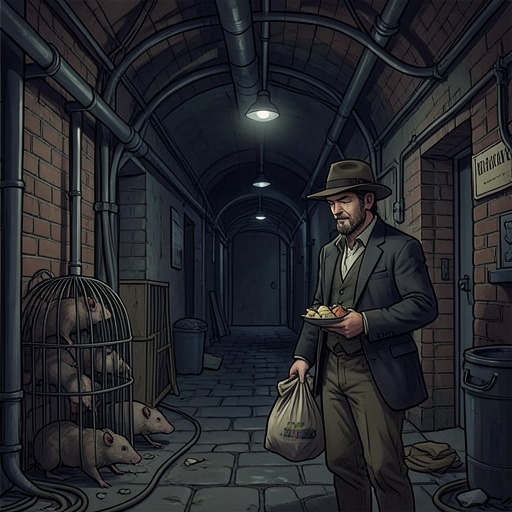
The Clan’s exploration presents a more unsettling picture of the same system. Darktan finds many traps, including live traps and lethal ones, and poison scattered through the town. Most traps appear old or empty, and the exploring rats find no living rats in the tunnels apart from one new acquaintance. Yet Darktan detects the smell of many rats near where he found her. The contrast between empty streets below ground and the hidden concentration of rats suggests that the danger to the Clan cannot be understood simply as a matter of rats roaming freely through town.
Captivity and the Human Use of Rats
The concealed rats are eventually visible in a room filled with cages. Rats crowd the enclosures, while a net bears the weight of those gathered above them. Hamnpork, usually cautious and suspicious of unfamiliar changes, reacts with anger and repeatedly demands that Keith release them. His response marks a change in the immediate stakes: the Clan is no longer investigating an abstract danger beneath the town but confronting a mass of captive rats and the possibility that they will remain imprisoned.
Maurice explains another use of captured rats through his account of rat-coursing. He recalls men closing the doors of a barn, setting up a circular wooden enclosure, tipping live rats from boxes into the ring, and releasing terriers. The rats generally ran around rather than fighting the dogs. Darktan asks why the rats did not attack, and Maurice answers by distinguishing an individual rat from a frightened crowd: many rats overwhelmed by shared fear do not act like a collection of independent, brave individuals. The episode reveals that the rat-catchers’ relationship with rats extends beyond trapping them as pests; captured rats can also be brought alive into an arranged spectacle.
Fear, Identity, and Organized Resistance
Fear threatens the Clan’s ability to respond to captivity. When frightened rats race past Peaches and Dangerous Beans, one squeals and gibbers instead of speaking. Dangerous Beans recognizes that they have forgotten how to talk. The scene contrasts the Clan’s hard-won capacity for thought and communication with a state in which terror overwhelms both. The mass of caged rats makes that danger visible, while Hamnpork’s demand that they be released asserts that the captives matter to the Clan, not merely as evidence in an investigation.
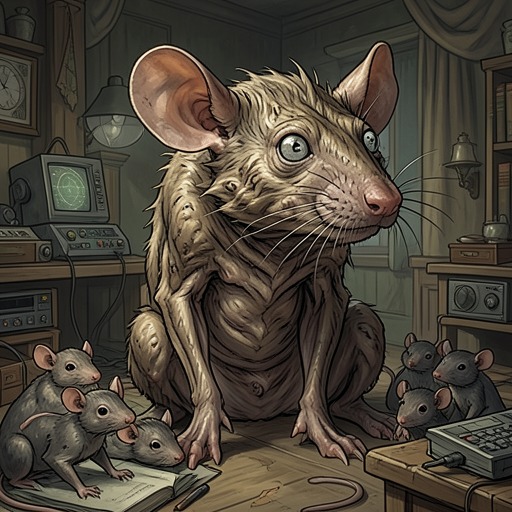
The Clan’s identity is itself formed against the threat of being treated as ordinary animals. Dangerous Beans argues that controlling fire allows the rats to make a statement: they are separate, they are not merely rats, and they are the Clan. The claim matters in a conflict where human accounts reduce rats to vermin and the rat-coursing crowd treats them as a frightened mass. Maurice makes a related distinction when he explains that many rats under the pressure of panic behave as one mob, not as separate thinking individuals. These observations do not erase the force of collective fear; they clarify why the Clan’s identity and coordination are essential to resisting it.
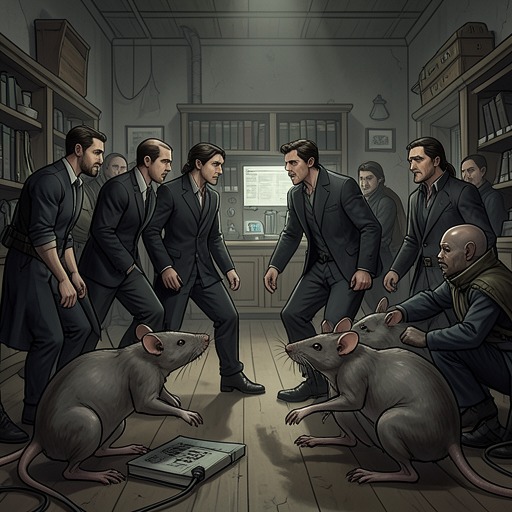
Darktan turns that principle into action when he addresses the young rats in his squad. He presents the unknown danger below the town as something the group can confront together, calling on them as rats who can think and refuse to run. Later, the Clan’s attack on enemy rats is organized rather than a chaotic rush: the rats advance in a line, close ranks around attackers, and pursue fleeing opponents in pairs when the formation breaks. Their discipline provides a sharp contrast to the helpless crowd described in Maurice’s rat-coursing story. Against the rat-catchers’ power to confine rats and exploit their fear, the Clan acts through shared purpose and coordination.
From Threat to Negotiation
The conflict’s proposed resolution rejects a simple exchange of threats. Darktan tells the mayor that the people could call dogs and drive rats away temporarily, but that the rats live beneath the floorboards and know how to use fire and poison. He presents the choice not as a promise of immediate attack but as an opportunity to talk. The mayor’s question about whether the rats can think exposes the basic barrier to agreement: human beings have treated them as animals incapable of negotiation, even as Darktan addresses him directly.
Darktan’s proposal is reciprocal. He suggests that humans pretend rats can think and that rats pretend humans can think, a wry formulation that recognizes distrust on both sides rather than demanding that only one side change. Maurice develops the practical implication by imagining a town where residents and rats agree on rules: a person could ask rats to leave most of a tray of cakes alone, and the rats would agree. The mayor resists the implication that such an arrangement is straightforward, so the scene presents coexistence as a possibility to be worked out, not a settled result.
The relation therefore changes in direction without becoming uncomplicated. Captivity, traps, poison, and rat-coursing embody a human system that makes rats objects of fear and use. The Clan’s speech, identity, solidarity, and ability to fight together challenge that status; Darktan’s appeal and Maurice’s example then turn resistance toward negotiated limits. The emerging alternative depends on recognizing the rats as a community with whom humans can make arrangements, rather than assuming that force alone can make them disappear.